Everything You Need to Know About Dental Clinic Design
Traditionally, dental clinics have been functional above all else— clinical but clean, professional, but not especially welcoming. While these environments certainly serve their purpose, a more considered dental clinic design can make a big difference to the feel of your practice, especially for patients with dental anxiety.
As experts in healthcare fitouts, Akord Projects is exceptionally proud of our portfolio of dental fitouts in Sydney.
In our dental fitout project gallery, you’ll find a fresh take on dental clinic design ideas. Our fitouts are compliant and clinically functional, of course, but they’re also relaxed, modern, and welcoming.
With over 100 successful medical clinic fitouts in Sydney and long-standing partnerships in the healthcare sector, our clients trust us for our clarity, collaboration, and creative thinking.
In the following article, we’ll look at why dental clinic office design matters, how to make design choices that positively impact both your patients and your staff, and what you should consider before you get started.
Why dental clinic interior design matters
It goes without saying that most people would prefer to be in beautiful, well-designed spaces, but the decision to invest in dental clinic design goes deeper than aesthetics. Studies have shown that improving waiting room design can reduce patient anxiety.
A dental visit is already stressful for many people, and the environment patients walk into can strongly influence how calm or anxious they feel before treatment. Thoughtful design elements like natural light, comfortable seating, indoor plants, and calming colours can help reduce that stress and create a more positive experience. A well-designed clinic can also improve how patients perceive the quality of care, making them feel more willing to return for future treatment.
Key elements of designing a dental clinic
The best dental clinic design will depend on a few factors— the space you’re working with, your personal brand, cost, and future planning.
Optimising layout and patient flow
Space planning is one of the most critical factors in clinic success. While it would be great to have infinite space to work with, most clinics are confined to relatively small floor plans (the majority of dental clinics are less than 180 square metres), and rely on some smart planning to make the most of every inch.
A well-considered dental clinic design in a small space ensures patients can move naturally from reception to waiting areas, treatment rooms, and checkout without confusion or backtracking, creating a smoother and less stressful experience.
Good patient flow also benefits the clinic itself. Strategic layouts that streamline movement and reduce bottlenecks can increase the number of patients seen each day, while also improving staff productivity and overall workflow.
Creating a comfortable, patient-centred environment
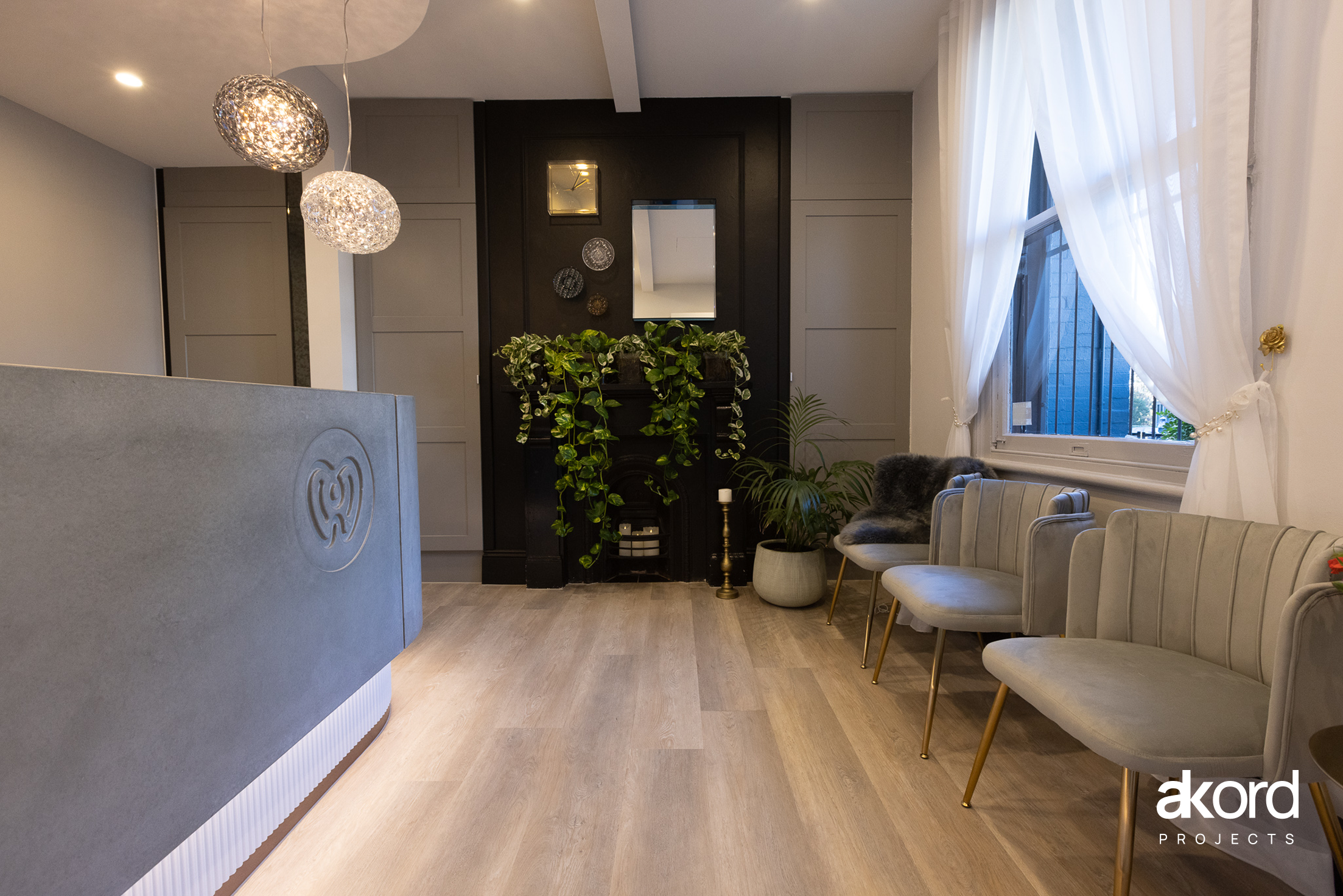
The waiting area is often the first impression of a dental clinic and strongly shapes patient expectations for their visit. Research shows that waiting areas are a common source of stress, but thoughtful design elements like natural light, comfortable seating, indoor plants, and calming colours can help reduce that stress and make patients feel more at ease.
Beyond just comfort, a patient-centred environment also improves how patients perceive your care. Simple design choices like clear signage, a welcoming reception, and a sense of privacy during check-in can make patients feel more relaxed and confident in your clinic.
Ensuring compliance, hygiene, and infection control
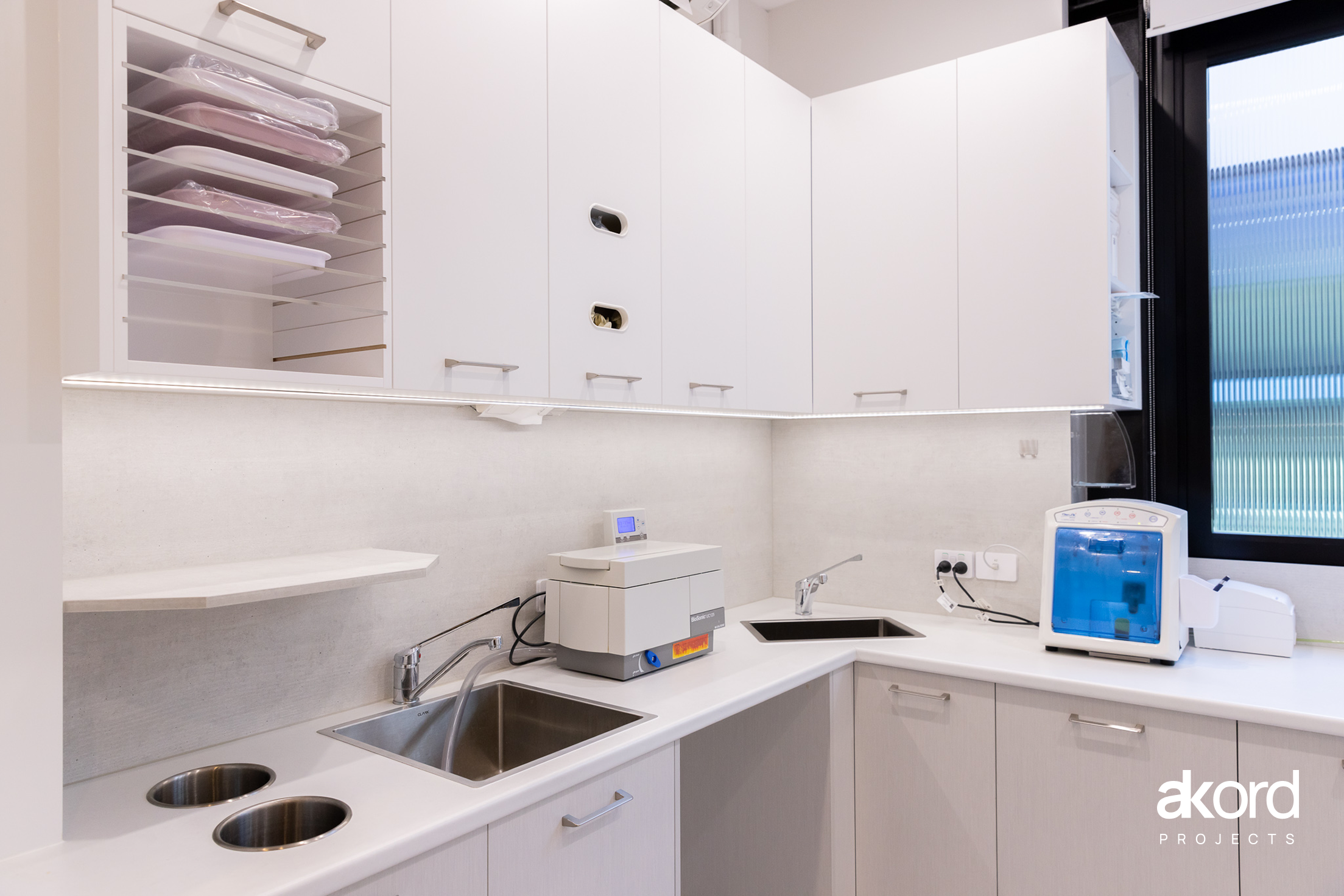
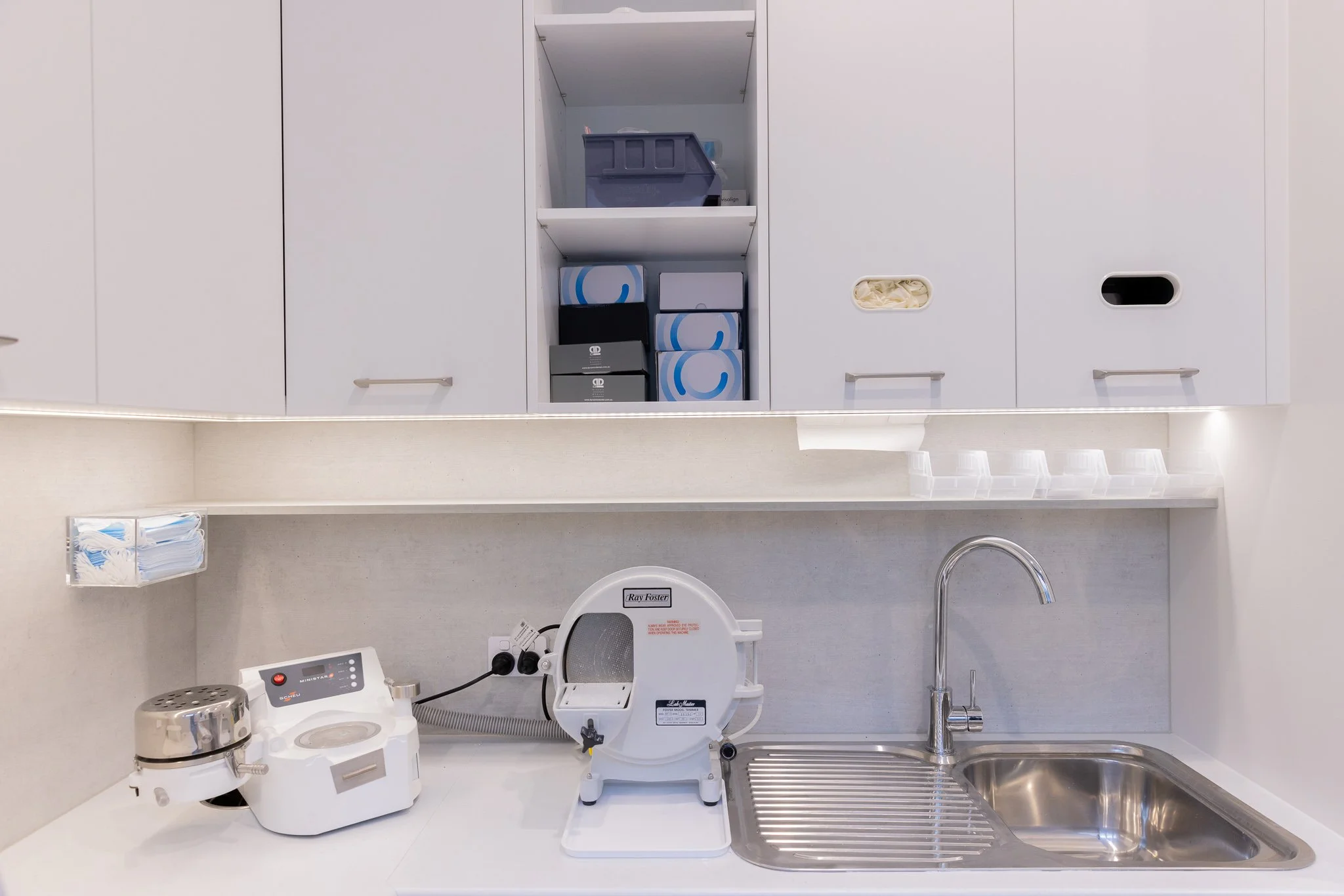
While design and aesthetics are important, dental clinics also need to meet strict health and safety requirements. This means planning spaces that support proper infection control, including clearly separated clean and dirty zones, easy-to-clean surfaces, and layouts that minimise cross-contamination. Even small design decisions, like using seamless materials or reducing clutter, can make a big difference in maintaining hygiene standards.
Compliance can be a minefield to navigate, which is where an experienced healthcare fitout specialist like Akord Projects can make a big difference.
Running the project under a design and construct contract helps here too, since one contractor stays accountable for compliance across both the design and the build.
Modern dental clinic design ideas
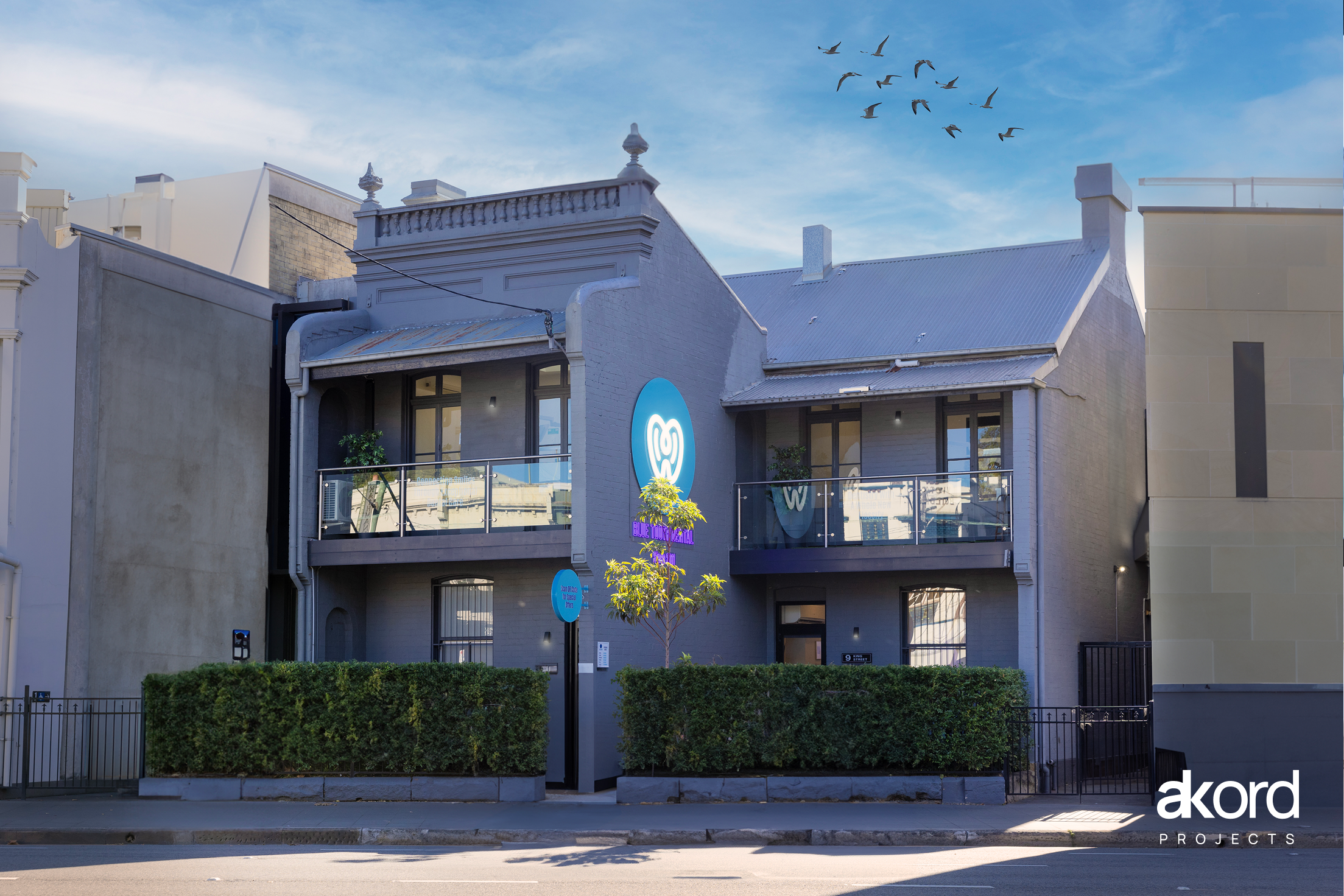
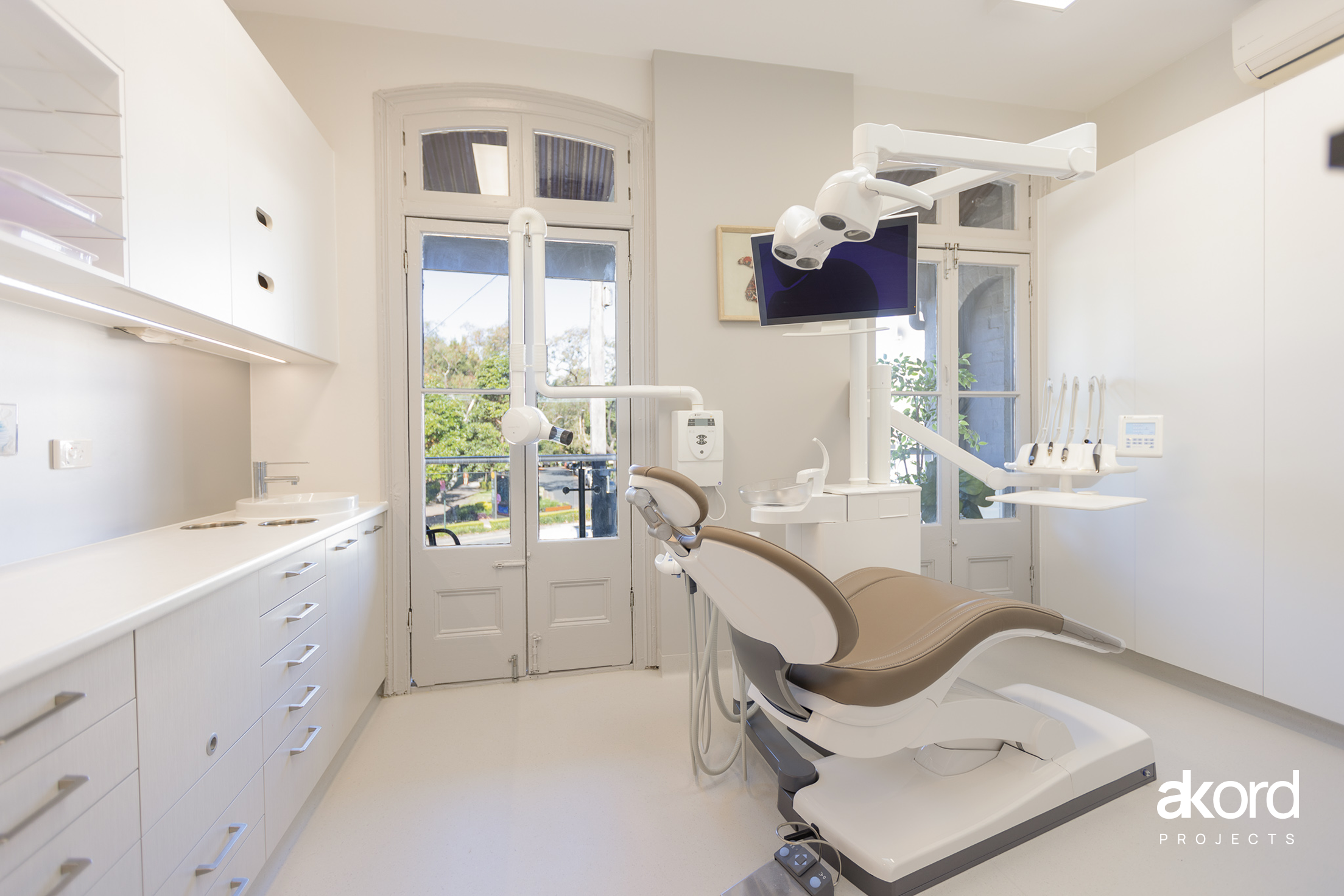
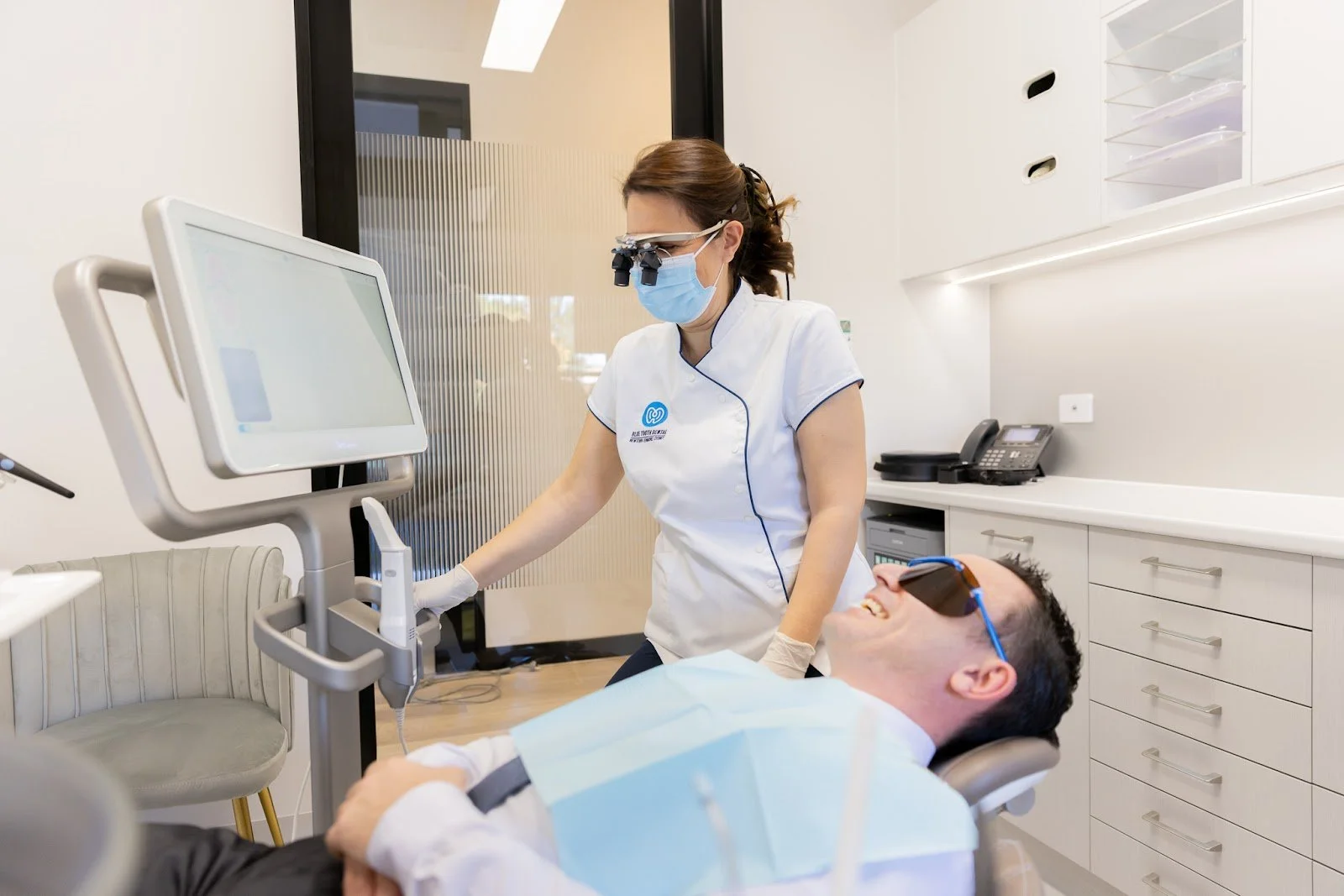
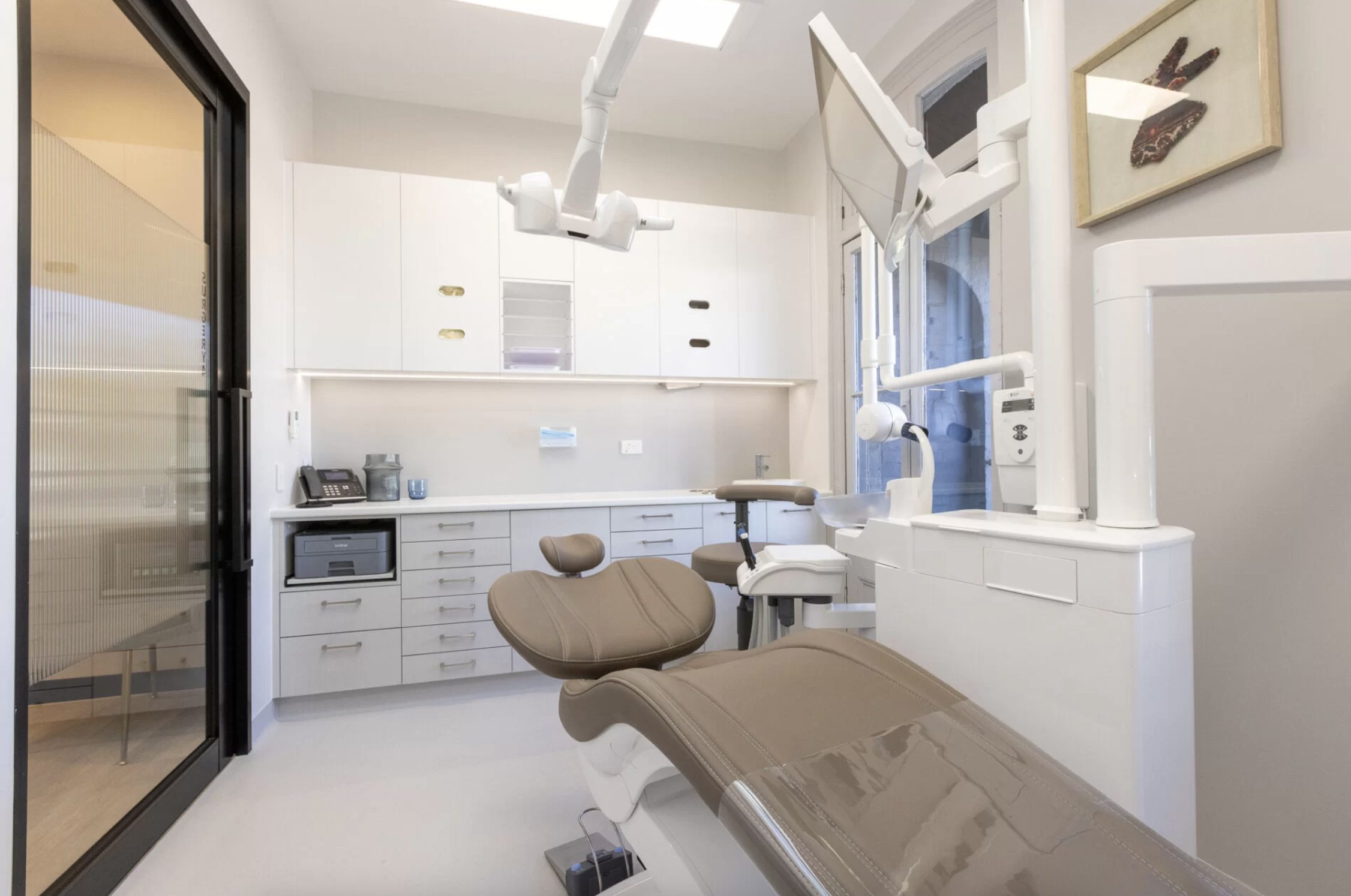
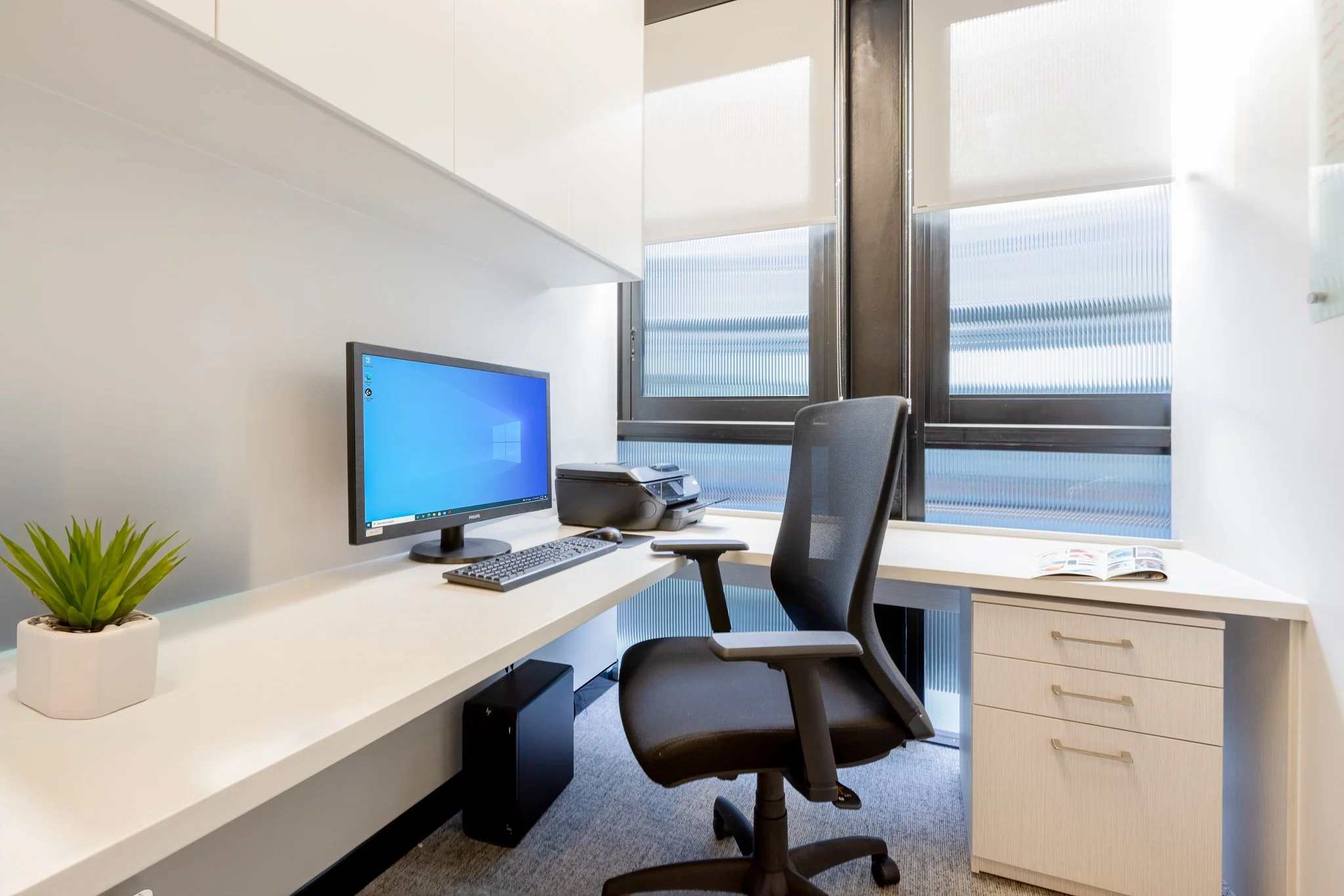
A modern dental fitout we’re especially proud of is our design for Bluetooth Dental. Bluetooth Dental skips the clinical white furnishings and fluorescent lighting in favour of soft, neutral tones that instantly put patients at ease. Smart layout planning ensures smooth patient flow and efficient staff movement throughout the space, from reception and waiting areas through to consult and treatment rooms.
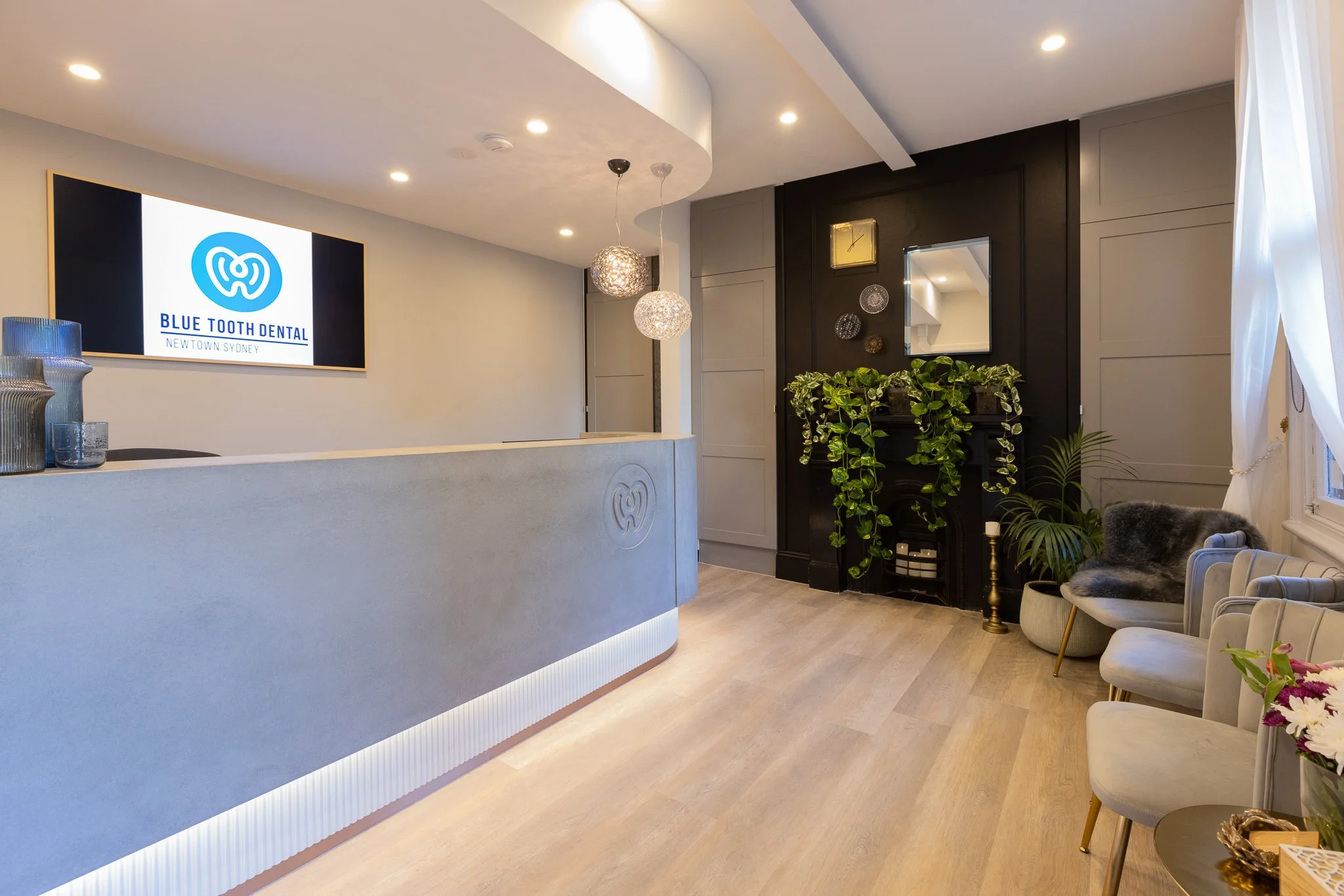
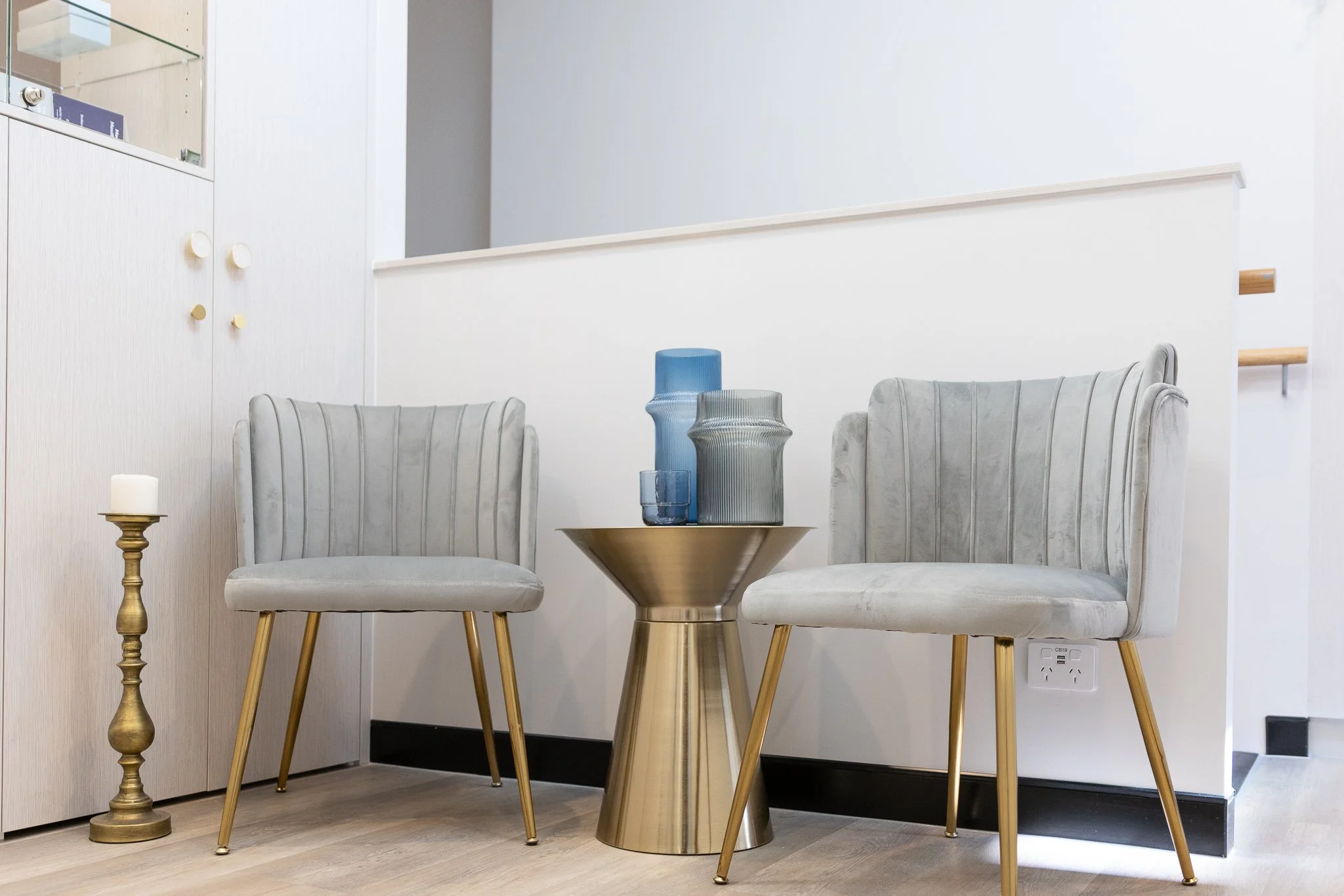
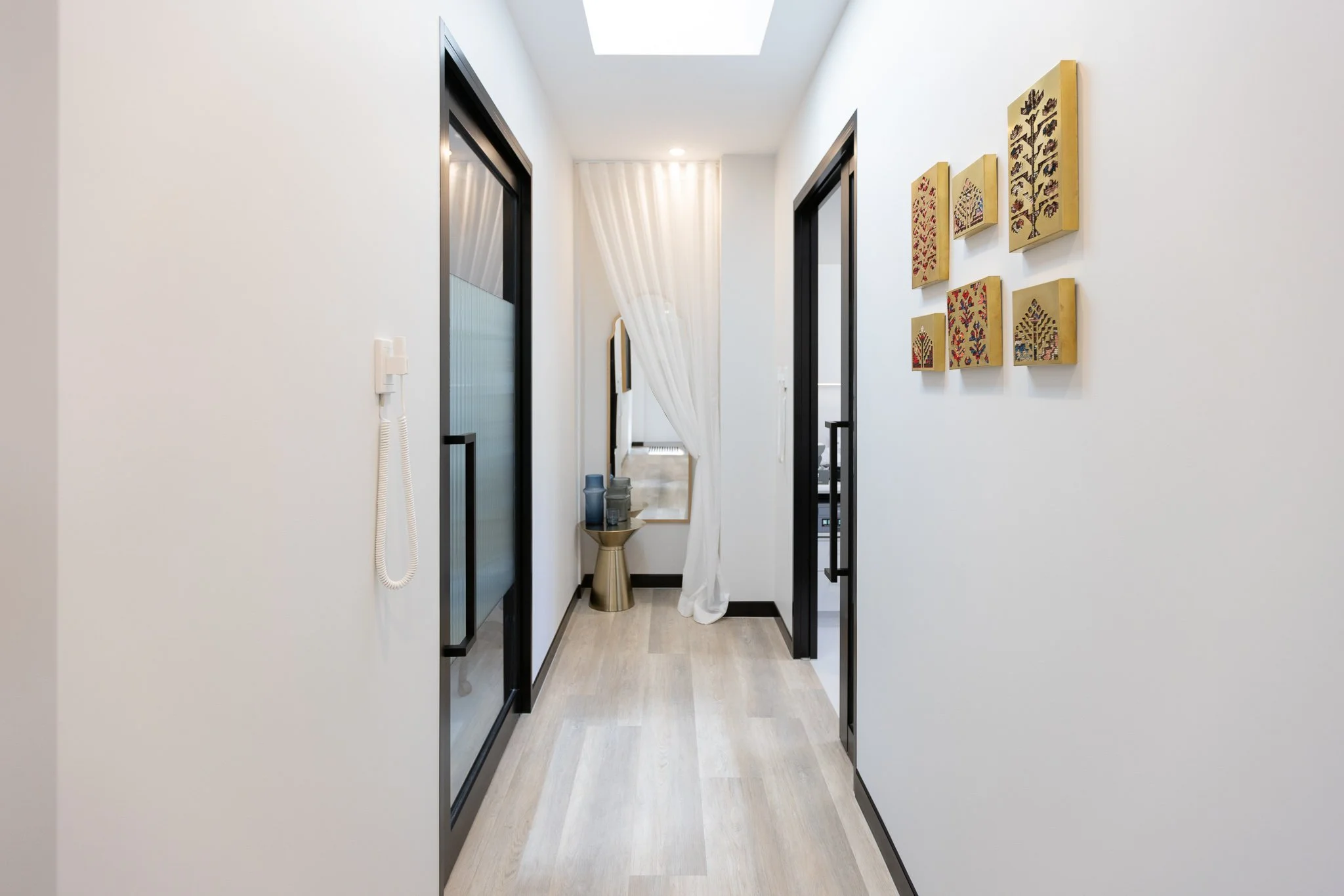
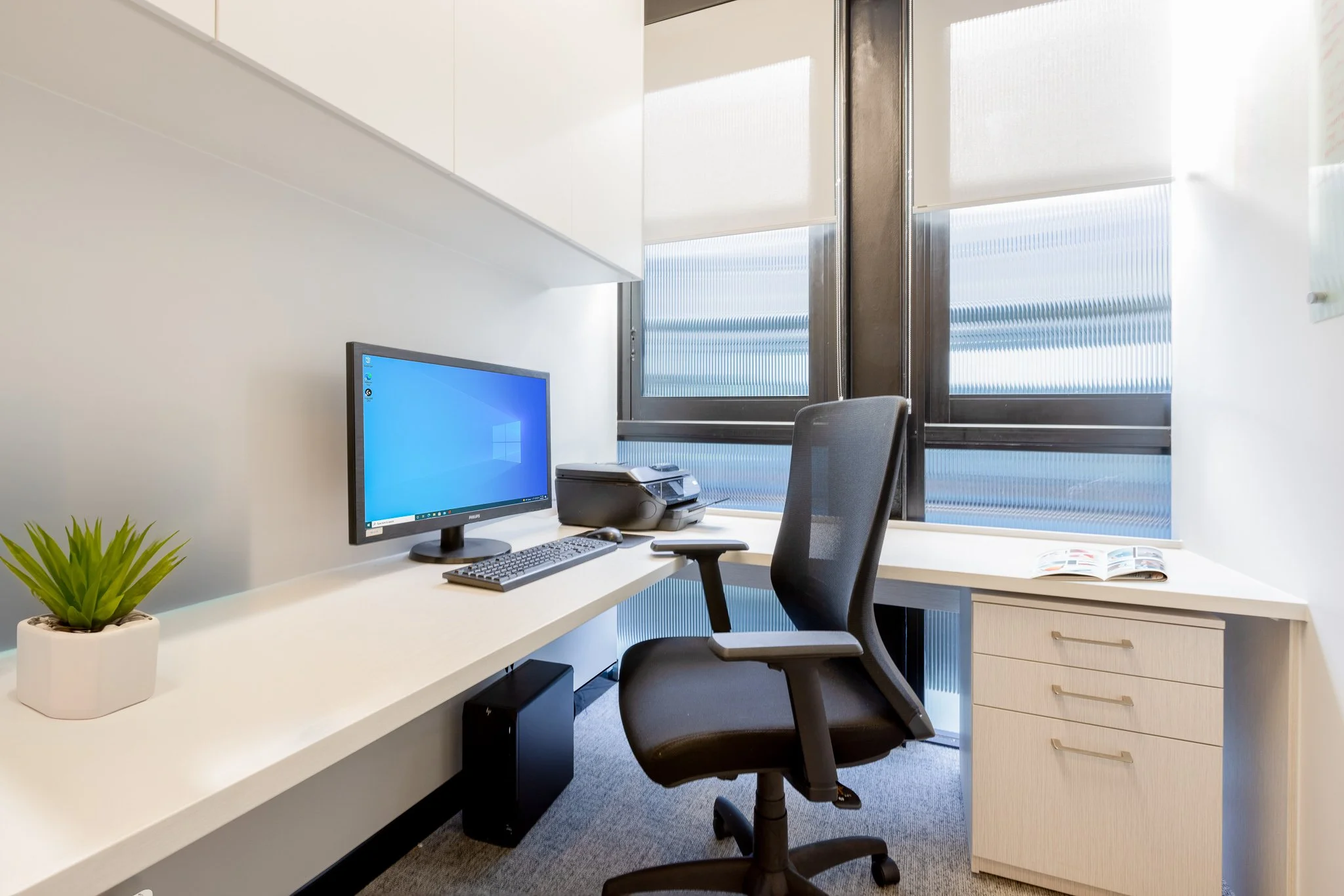
Each dental room is fully equipped yet uncluttered, giving practitioners what they need without overwhelming the patient visually. Soft lighting, acoustic considerations, and quality materials contribute to a sense of calm and professionalism.
Cost factors in dental clinic design services
Cost is a big consideration, and you’ll want to have a holistic picture of what you can afford before you get started to avoid budgetary project delays down the line.
Dental clinic fitouts often cost around $2,000–$2,500 per sqm excluding specialised dental equipment, but this is really just a starting point. In reality, costs can vary quite a bit depending on the type of clinic you’re building, the level of finishes, and how complex the design is. Finally, the size and condition of the space can significantly impact costs.
Condition matters most when you are taking on an existing clinic, as an inherited fitout can carry upgrade costs that are easy to overlook during a sale. We have covered that in our guide to buying a dental practice.
A basic fitout with standard materials and simple joinery will sit at the lower end of the range, while a more premium clinic with custom cabinetry, feature lighting, and high-end materials can push well beyond $3,000 per sqm.
When it comes to dental clinic design, it’s worth remembering that some of this cost is non-negotiable. Dental clinics must meet strict health, safety, and infection control standards, which often adds an extra 10–15% to the overall budget.
Tips for planning dental clinic room design
Aim for a minimum operatory size of around 10–12 sqm: This typically provides enough space for the dental chair, cabinetry, assistant movement, and essential equipment without creating workflow bottlenecks.
Allow at least 1–1.2 metres of clearance around the dental chair: This gives both the dentist and assistant enough room to maintain ergonomic working positions during procedures.
Position cabinetry behind or beside the dentist, not behind the patient: This reduces unnecessary turning and movement during procedures and allows instruments to be accessed quickly.
Use wall-mounted cabinetry where possible: Floating cabinets make the room easier to clean, improve infection control, and create more usable floor space.
Use sliding doors where space is limited: Sliding doors reduce wasted space compared to swing doors and make it easier to move equipment and patients.
Include space for future technology upgrades: Allow room for additional monitors, scanners, or imaging equipment so the clinic can adapt as technology evolves.
Install ceiling-mounted lighting and equipment where possible: Ceiling-mounted units free up floor space and improve accessibility around the dental chair.
How Akord Projects can help
Whether it's a small allied health studio or a multi-level medical centre, at Akord Projects we tailor every solution to your practice's purpose. We’re not just contractors, we’re collaborators. We translate your ideas into practical, future-proof environments that grow with your practice.
Contact us today to learn more.